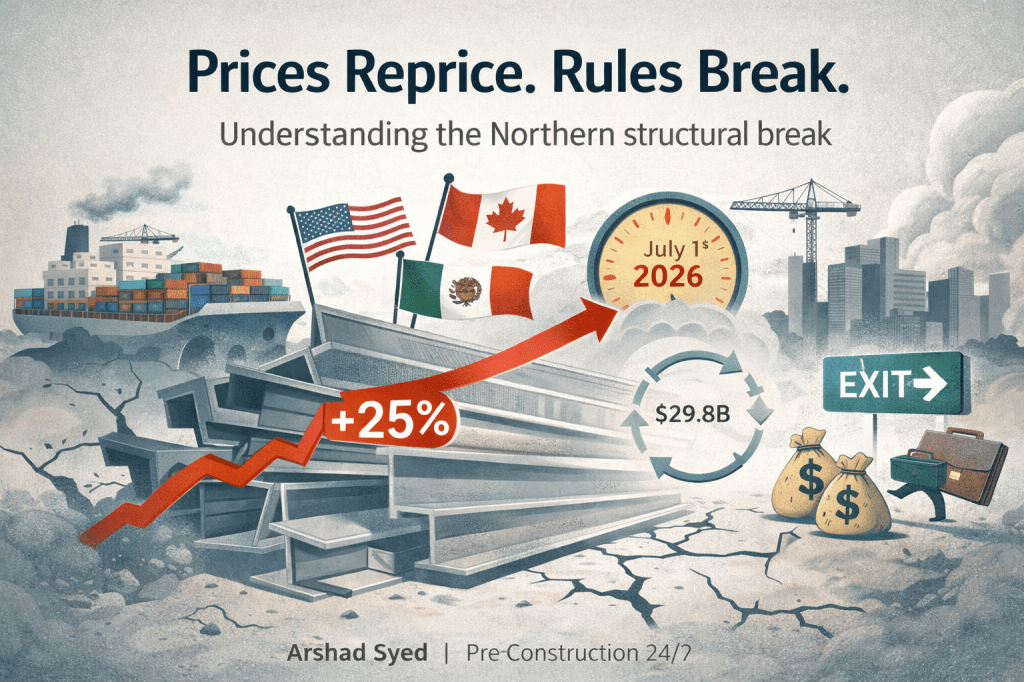
VISUAL BRIEFING
The Northern Shockwave
A system-level field note on trade, cost, and structural fracture
Written to explain systems, not chase headlines.
Pre-Construction 24/7
THE EVENT
A quiet government document turned Boxing Day into the moment North America’s cost structure changed.

THE NUMBER
A 25% cost increase was manually applied to the materials that hold the physical economy together.

THE MISDIRECTION
While inflation was declared “cooling,” construction inputs were re-priced upward overnight.
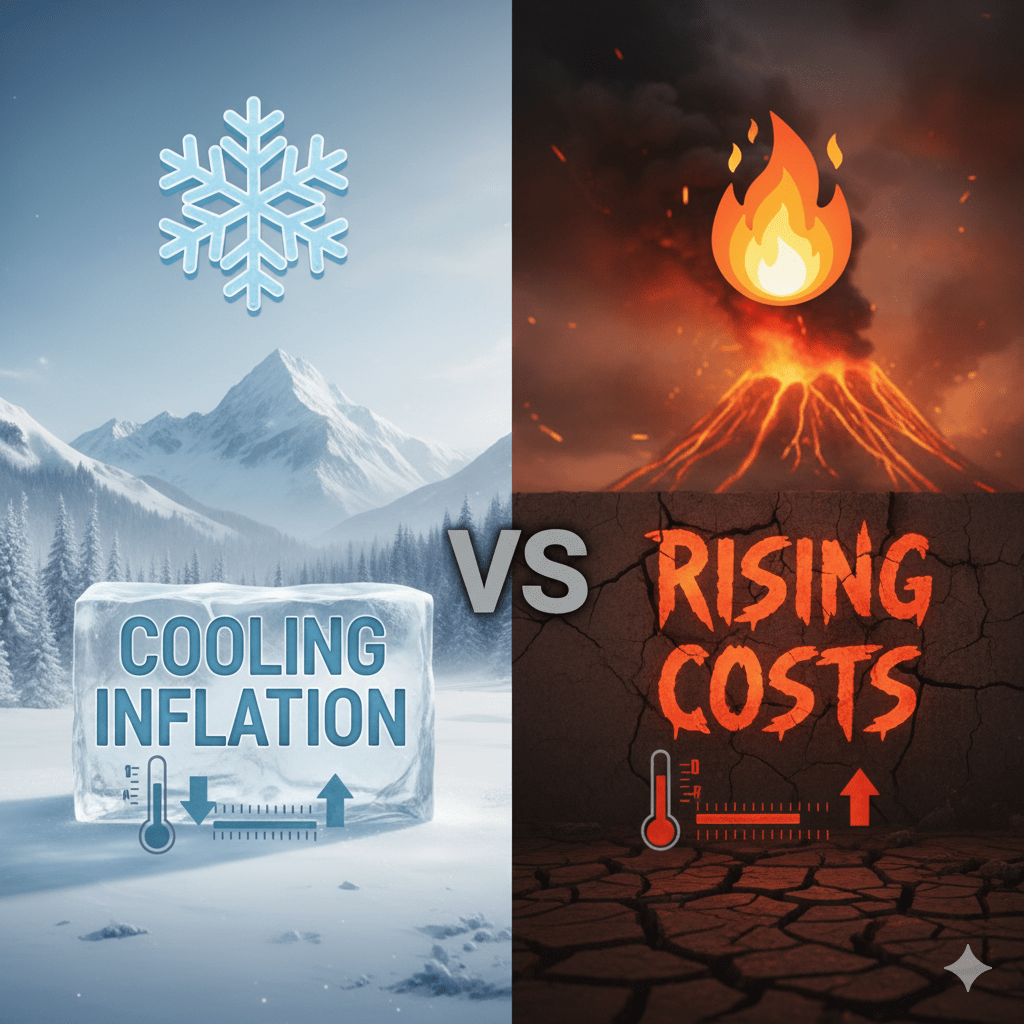
THE LIE
This was not a trade dispute — it was a structural escalation.
THE SCALE
$29.8 billion in goods were pulled into a retaliation loop with no built-in exit.

THE TIMELINE
The USMCA faces a mandatory sunset review on July 1st, 2026 — less than seven months away.

THE PRECEDENT
Trade wars don’t end inflation — they hardwire it into supply chains.

THE ESCALATION
Tariffs moved from raw steel to finished products — from the material to the nails.

THE GROUND TRUTH
Fixed-price contracts cannot survive floating political costs.
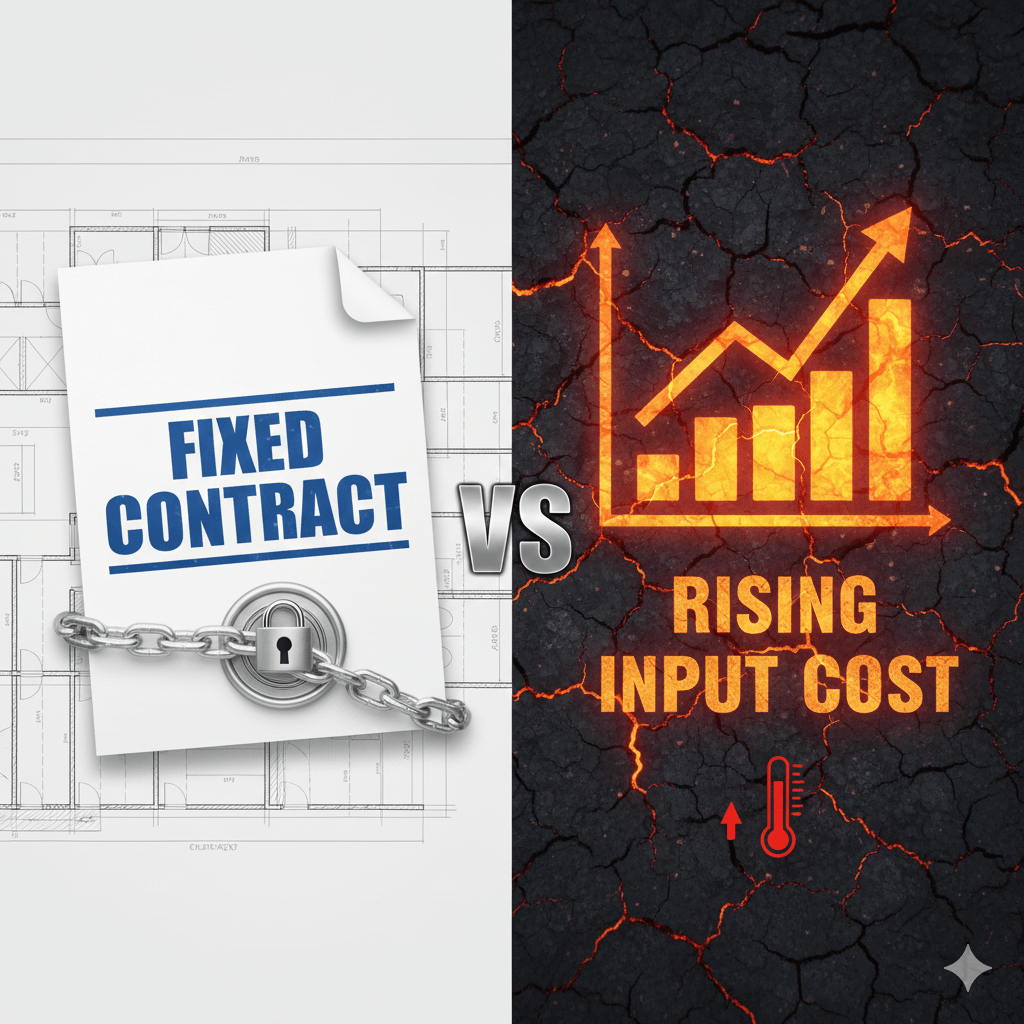
THE FIRST DOMINO
When builders walk away, projects don’t pause — they vanish.

THE PASS-THROUGH
Tariffs are paid by households, even when buying domestic goods.

THE STACKING EFFECT
Some materials now face effective tariff rates near 50% due to policy layering.
THE LOBBY GAP
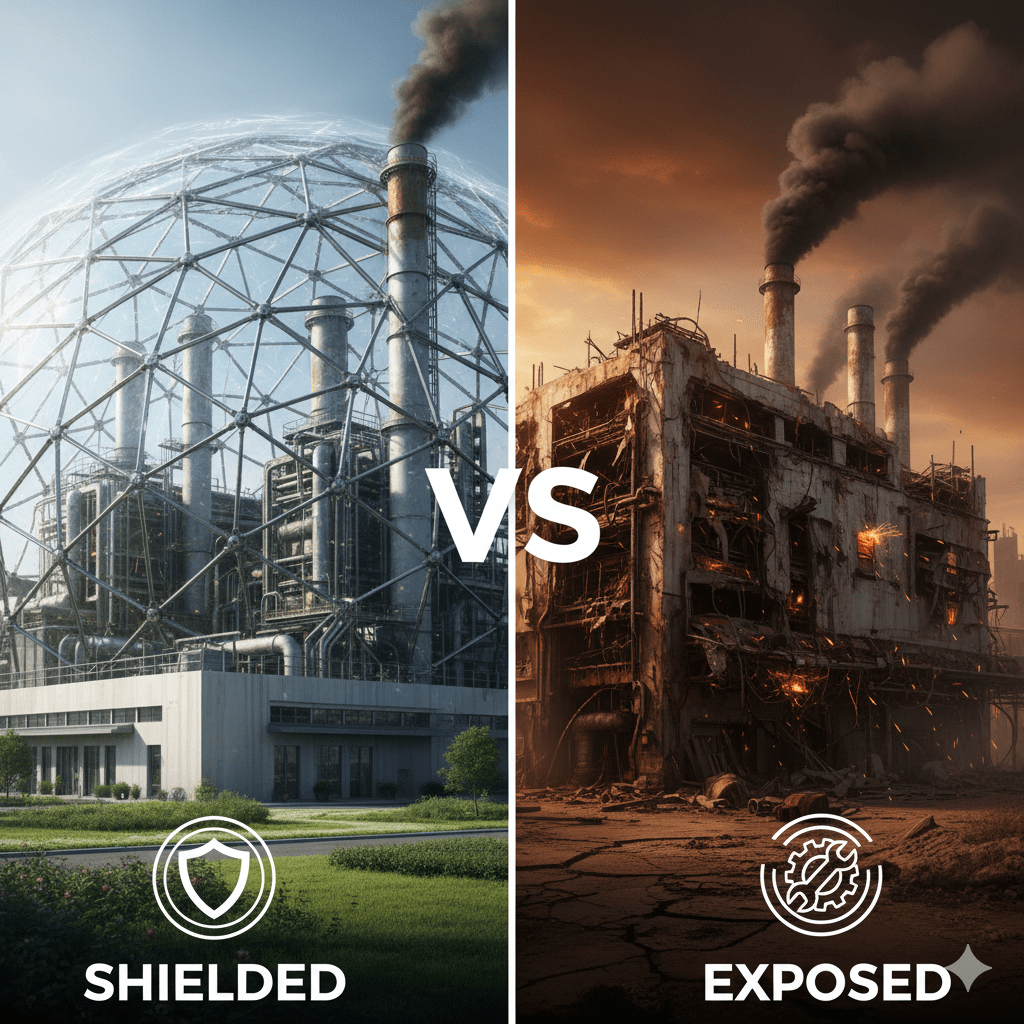
Large multinationals received exemptions — small builders absorbed the cost.
THE CANARY
Hamilton isn’t an outlier — it’s an early signal.

THE ENERGY RISK
Steel tariffs quietly attack the economics of maintaining energy infrastructure.

THE AGRICULTURAL TRANSMISSION
When fertilizer costs rise, food inflation follows with a delay.

THE MARKET REALITY
Investors are no longer pricing businesses — they’re pricing politics.

THE CAPITAL TRUTH
Capital does not argue — it leaves.

THE CORE QUESTION
Do you own assets, or claims that depend on systems staying intact?

THE STRUCTURAL SHIFT
The assumption that tomorrow looks like yesterday just expired.

THE WARNING
This is not pessimism — it’s arithmetic.

THE CLOSE
Boxing Day wasn’t symbolic — it was mechanical.

 Pre-Construction 24 7