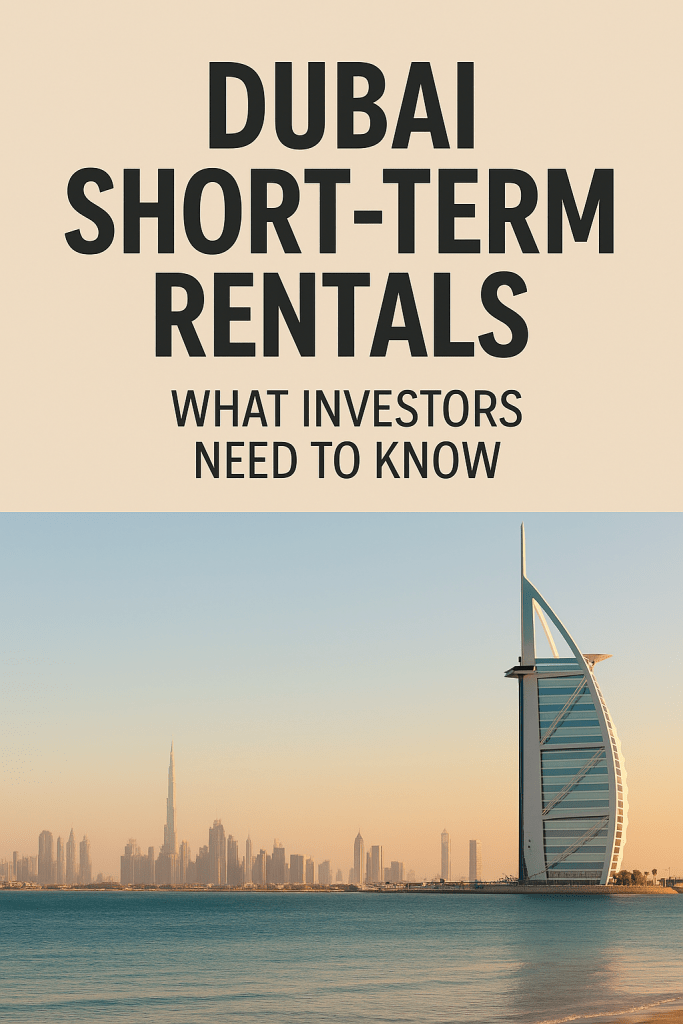
This guide gives investors and customers a complete understanding of Dubai’s short-term rental market, including how Airbnb became regulated, why the city is ideal for holiday homes, and what guests experience from booking to check-out. You’ll learn how the licensing process works, how operators vet guests, the red flags to watch for, and what companies like Frank Porter handle on your behalf. The summary explains occupancy trends, seasonal demand, cleaning standards, and the financial advantages compared to long-term rentals. By the end, you’ll know exactly how the system works and why Dubai remains one of the strongest markets for short-term rental investment.
1. Why People Choose Dubai for Short-Term Stays
Dubai is built for tourism, business, and short visits. Travellers choose short-term rentals because:
- They get more space than a hotel (kitchen, laundry, living area).
- Ideal for families, business travellers, or long stopovers.
- They can stay in prime locations like Downtown, Marina, Palm, JVC, and even suburban communities at different budgets.
- Dubai has a very safe, clean, and reliable tourism ecosystem, making short stays hassle-free.
2. How Airbnb Entered Dubai
- Airbnb became officially regulated in Dubai around 2016, when the government introduced holiday-home laws.
- This opened the door for licensed operators like Frank Porter, who launched in 2017.
- Unlike many cities where Airbnb grew uncontrolled, Dubai introduced regulations first, then allowed the industry to expand.
- This made Dubai one of the fastest-growing Airbnb markets in the world, with high demand and strong returns for investors.
3. How Airbnb Works in Dubai (Guest Experience)
A short-term rental experience in Dubai is nearly as organized as a hotel stay:
Guest Process
- Booking through Airbnb, Booking.com, or a management company’s own website.
- Identity Verification: Every guest must upload a passport to a government portal before check-in (mandatory).
- Check-In: Guests receive instructions, access codes, or meet-and-greet service.
- Stay Experience: The unit is fully furnished with linens, amenities, WiFi, towels, basic toiletries, and support service.
- Check-Out: Cleaning team resets the unit for the next guest — often same day.
Dubai’s strict documentation and tourism regulations create safe, predictable stays for both the guest and owner.
4. How Airbnb Got Legitimized in Dubai
The government created a structured framework through the Dubai Department of Economy & Tourism (DET):
- Every property must have a Holiday Home License (approx. AED 370/year for studios, increasing with bedroom count).
- Operators must pay Tourism Dirham fees — same as hotels.
- Properties are inspected randomly for quality and safety.
- There is a hotline for both guests and hosts to report issues.
- Regulations eliminate things like:
- illegal rentals
- overcrowding
- bad actors
- misrepresented listings
This makes Dubai one of the cleanest, safest Airbnb markets globally.
5. What Investors Need to Know (Operational Breakdown)
A. Setup & Onboarding
Investors give keys to a management company who handles:
- Interior design & furnishing (3–4 weeks to fully prepare)
- Photography & listing creation
- Pricing optimization
- Multi-platform listing (Airbnb, Booking, direct bookings)
- Government licensing
B. Daily Operations
A professional operator handles:
- 24/7 guest communication
- Cleaning teams & laundry logistics
- Maintenance and repairs
- Check-in / check-out
- Payments and reporting
- Guest verification
- Reviews and rating management
This creates truly passive income for the owner.
6. Vetting Guests in Dubai: How It’s Done & Red Flags
Vetting System
Dubai’s system is unique:
- Every guest — including children — must upload a passport to the government system.
- This creates accountability and reduces risk of misconduct.
- Operators check:
- guest history on Airbnb (reviews),
- communication style,
- purpose of stay,
- group size vs. property size.
Common Red Flags
- Guests refusing to send IDs
- Last-minute suspicious bookings
- Guests asking about “private meetups” or “late parties”
- Bookings for more occupants than allowed
- No reviews + vague answers
- Local UAE residents booking large apartments (sometimes risky, sometimes fine)
Reality Check
Even “young party groups” often behave well in Dubai because:
- They know Dubai’s rules are strict.
- Fines for damage or misconduct are heavy.
- Passport registration creates accountability.
Surprisingly, families have caused more damage in some cases than party groups — showing you cannot rely solely on appearance.
7. Legal Requirements for Owners
As an investor, you must have:
- Property ownership documents
- A valid Holiday Home License (DET)
- Basic contents insurance
- Service charges up to date
- No luxury valuables stored in the unit
Most operators help you handle all legal paperwork.
8. Cleaning Standards
Cleaning is one of the biggest challenges and the most important driver of reviews.
Professional companies use:
- Dedicated cleaning teams
- Fresh linens & towels for every guest
- Quality checks before hosting
- Same-day turnover for back-to-back bookings
- Ozone machines for smoke removal
- Restocking (water, coffee, toiletries)
This is why DIY host operations often fail — maintaining hotel-level cleaning every day is very difficult without a large team.
9. Occupancy Rates & Seasonal Trends
Dubai’s occupancy is one of the strongest in the world for short-term rentals.
- Annual occupancy: 82%–85% (across large portfolios)
- Peak season (Sept–May): 90%+
- Summer (June–Aug): 50–60% at lower rates
- Summer sees:
- remote workers
- families visiting
- long stays at lower nightly prices
This keeps cash flow stable even in low season.
10. Profitability & Financial Strength
Short-term rentals outperform long-term rentals in most Dubai neighborhoods over 3–5 years.
Why?
- You’re not tied to fixed annual rent.
- Pricing algorithms fill gaps at optimal prices.
- Direct bookings increase over time.
- There’s no month-long vacancy like long-term rentals.
Typical Advantages
- Higher annual returns vs. long-term tenants
- Flexibility — you can use the unit yourself
- Easier to sell because property is always vacant
- Better asset protection because units are cleaned frequently
11. What Makes Dubai Different From Other Airbnb Markets
- Strong regulation (reduces bad guests)
- Government support & licensing
- Huge tourism demand
- High safety standards
- Modern properties with hotel-level amenities
- A reputation worldwide for trust, order, and quality
This is why Dubai is the fastest-growing Airbnb market globally.
 Pre-Construction 24 7